











A new creative wave has recently seized the figure of the zombie. Zack Snyder proposed a Las Vegas that has become the chosen territory of a hierarchical zombie society. The Koreans with the series Kingdom or Netflix with the Revolution have taken the undead out of the register of the horror film to integrate it into the historical fresco. The mangaka Kumiko Suekane, known for the amazing series Afterschool Charisma, takes up this theme. With her refined drawing, her love of offbeat universes, she signs Versailles of the Dead, an ambitious story at the crossroads of Lady Oscar, the Revolution (the series) and the Pact of the Wolves. An atypical work with immense potential but which is lost in the threads of a sometimes confused frame and poorly managing its rhythm.
When zombies invite themselves to the table of History
In 1770, the young Austrian princess Marie Antoinette won the France to join the Dauphin Louis, heir to the throne of France. At his side travels in secret his twin brother who serves when the need arises as a look-alike of the queen. But his convoy approaches a country ravaged by an unknown evil that brings the living dead back to life. They attack the royal carriage in the countryside. The escort is massacred, the young princess devoured. Only his brother seems to have survived even if he is unable to explain how. Returning to the court of Versailles, he decided to pose as his sister and play the role of the future queen of France. If the deception is quickly discovered, the dolphin accommodates himself preferring illusion to truth. For the threat of the living dead is worsening and behind the scenes forces are agitated: some fighting against the scourge others using it. The king himself pursues a mysterious quest to eradicate zombies. What he does not know is that the twin brother did not return completely unscathed from the attack and that he carries within him the stigmata of a demonic force. 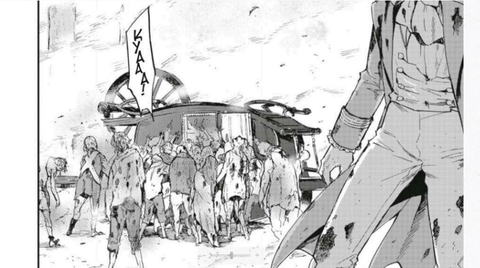
Versailles of the dead : Beauty and gore
The first four volumes set a fascinating atmosphere that never loses intensity. Indeed Kumiko Suekane relies on a brilliant artistic idea: the shift. On the one hand she makes extremely refined, luminous, realistic drawings. The faces exude a lot of softness, sensuality. The decorations express both the immensity of the palaces, the wealth of the king and the diversity of the kingdom. Particular attention was paid to textures: walls, objects. Nor is historical reality neglected. The reader will come across the famous necklace of the queen, remember the love of the king's doors or recognize the individual weapons of the time. It is thus very easy for the reader to be caught up in the plot that is a worthy heir to that of Lady Oscar. And on the other hand, the mangaka gives us a story of zombies without restraint. Gore is indeed very present. The volumes find a nice balance between horror and suggestion. There are no gratuitous or too long scenes. The attacks are fast, the corpses pile up with the right amount of close-ups. Blood, entrails, dot the pages but never ad nauseam. And as the line remains as beautiful as ever, we are immersed as in The Pact of the Wolves in a baroque tale: a sublime monstrosity. 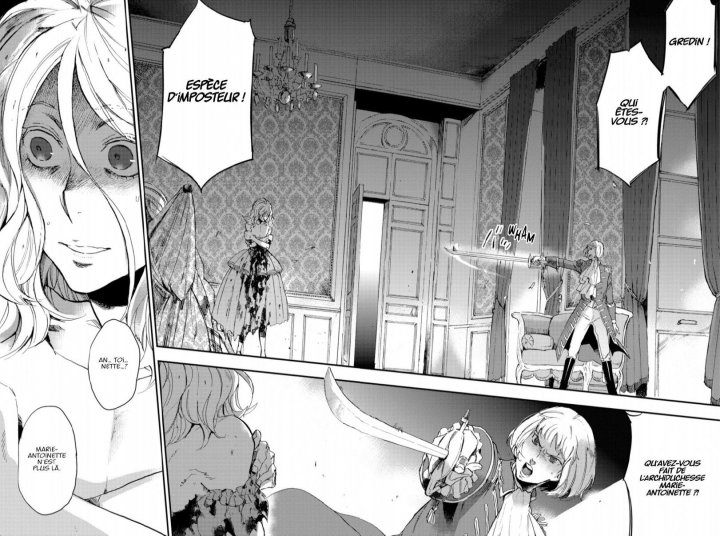
A fascinating bias, a plot that fades
Kumiko Suekane likes to take risks. Not content to integrate zombies into the story of France, she takes the opportunity to revisit through the character of the brother, the figure of the Knight of Aeon. It takes up the basic idea of the Lady Oscar series by reversing the premise. Here, it is no longer a woman dressed as a man but the opposite. She then cleverly treats the figure of the transvestite brother and everything he triggers: homosexual attraction, fatherhood. While building around a universe where we meet historical figures: Napoleon, Cagliostro, Louis XV, the favorites …Figures with which she plays: the future Napoleon is totally different from the model, the dolphin is much more hesitant than his model. The historical reality is twisted in favor of a double plot enjoyable: the fight against the undead, the adventures of the real-false princess. Yet from volume 3, the dynamic runs out of steam, the subject loses effectiveness. It seems on the one hand that the overall structure suffers from a very (too much?) Large number of secondary characters whose motivations are difficult to understand. It is often necessary to reread old passages several times to have a more or less clear idea of the forces involved. And as the plot goes fast, the action omnipresent, we often get lost between these protagonists who all have a crucial role. The narrative ambition of the author also explains this confusion, this exhaustion of the narrative. She has a lot to say. A third plot (worthy of the best esoteric novels) is also invited to those existing, even more explosive, deserving of important developments. But each volume struggles to clarify the issues, close certain arcs, or even bring satisfactory revelations.
Versailles of the dead: a furious desire to continue
However, it is not the least of the paradoxes to note the immense sympathy capital that this series retains after four volumes. Despite the significant reservations related to the narrative, it remains clear that the desire to know the end remains intact. How can this contradiction be explained? The first explanation stems from the author's sense of suspense. Each end of manga frustrates us enormously by leaving us both on our hunger and at the same time by suggesting us a revelation to come. The reader remains convinced that the managaka has perfectly calculated his move that the end will justify all the shadows scripted. 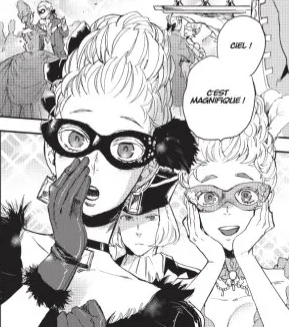 The second reason is the characters. Whether it is the fake Marie-Antoinette, the king, the bodyguards, we are very attached to their destiny. Everything is confusing, assumed. The evolution of the false queen presents us with an uncertainty: is she a victim, an executioner, a puppet? At the end of the penultimate volume, nothing is played, everything remains unclear. The result is the desire to see how the author will manage to close all the story arcs in the fifth and highly anticipated final volume. The manga Versailles of the dead remains an atypical work, visually superb, based on a rather crazy and assumed concept. The scripted reserves exist without however totally spoiling the pleasure of reading. The discovery of the last volume will make it possible to judge this series completely.